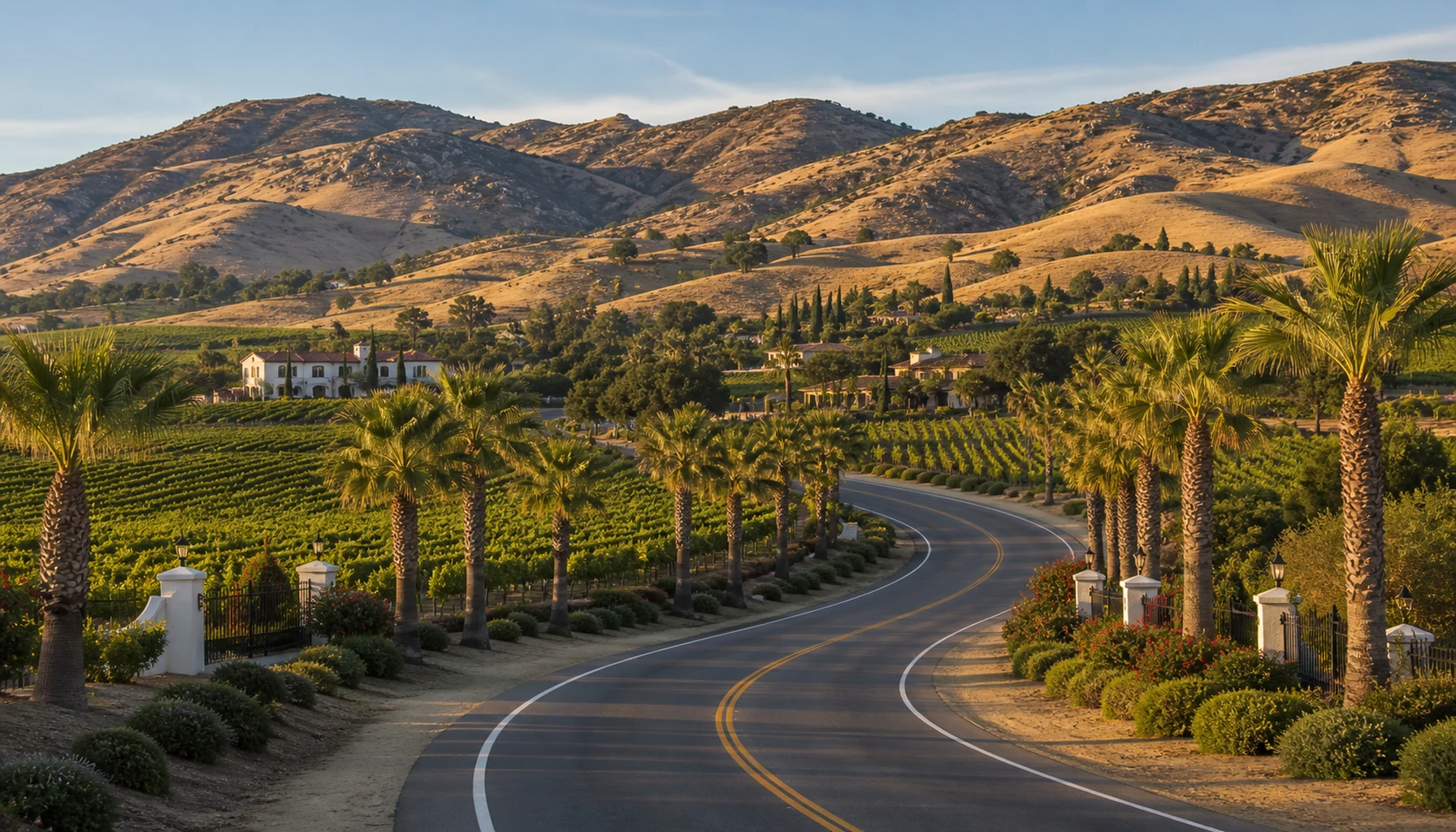
Rancho California Road
The main road east out of town and the valley’s front row: the founding estates, the resort wineries, the restaurants, and the biggest tasting rooms. If you have one day, spend it here.
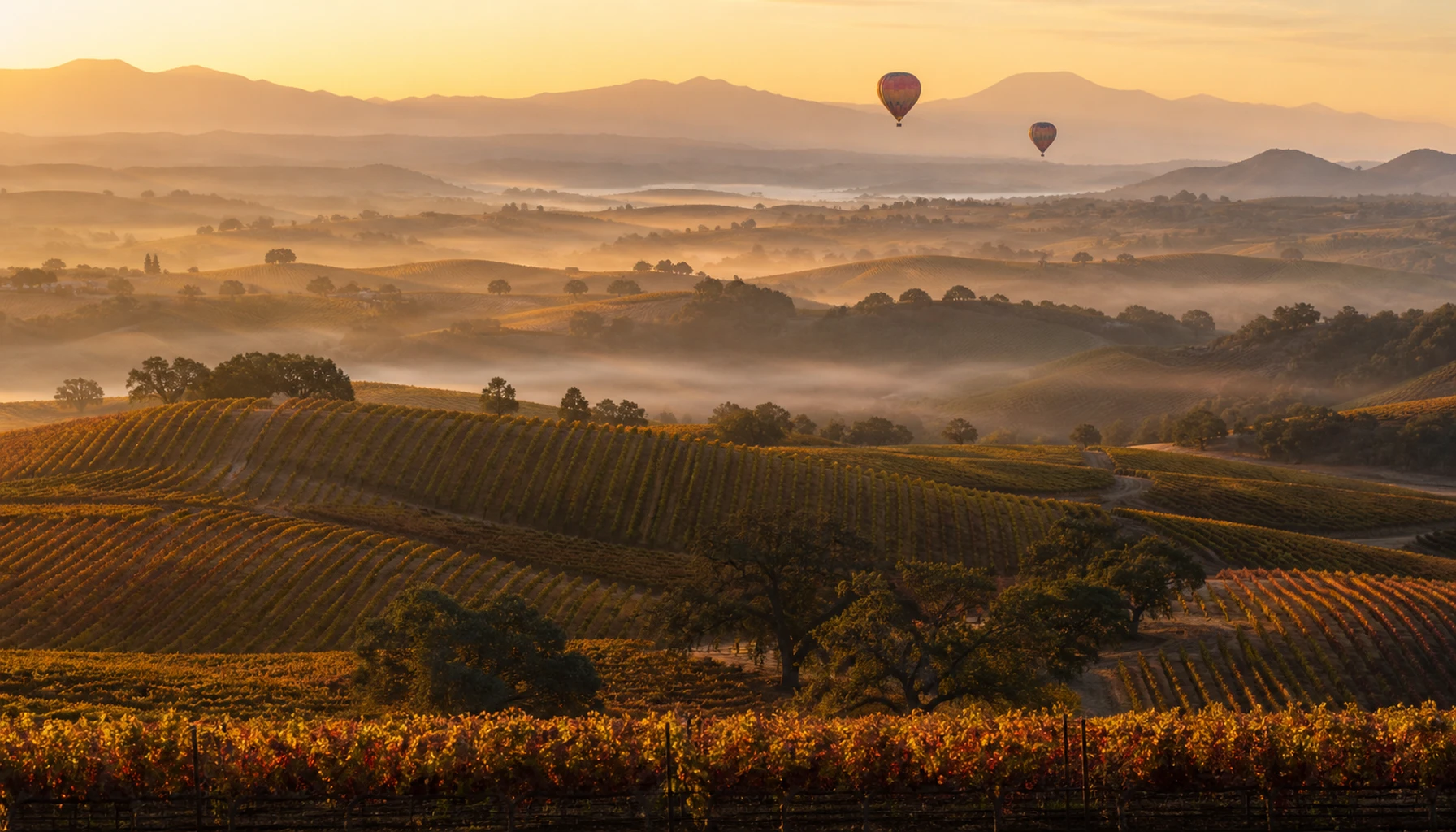
Est’d 1968 · First vines on decomposed granite
Fifty-some wineries in the hills an hour from San Diego — tasting rooms, dawn balloons, and long gold afternoons. This is the independent guide to doing the day well.
Tasting rooms pour late morning to five; balloons fly at first light
A high valley of decomposed granite, cooled every afternoon by ocean air through the Rainbow Gap.
The Temecula Valley sits at around 1,500 feet in the hills of southwest Riverside County — close enough to the Pacific that every afternoon, marine air slides through a low notch in the coastal range called the Rainbow Gap and cools the vines after a hot inland day. Warm mornings, cool nights, and fast-draining granite soils: the combination convinced the first growers to plant here in the late 1960s, and won the region its own federal appellation in 1984.
Today the valley pours everything from méthode-champenoise sparkling to big estate Cabernet, but its reputation rests on Mediterranean varieties — Rhône reds and whites, Italian Sangiovese, Montepulciano and Vermentino, Spanish Tempranillo — grapes that like the same weather the visitors do.
Nearly every tasting room in the valley sits on one of three country roads. Pick a trail and the day plans itself.
The main road east out of town and the valley’s front row: the founding estates, the resort wineries, the restaurants, and the biggest tasting rooms. If you have one day, spend it here.
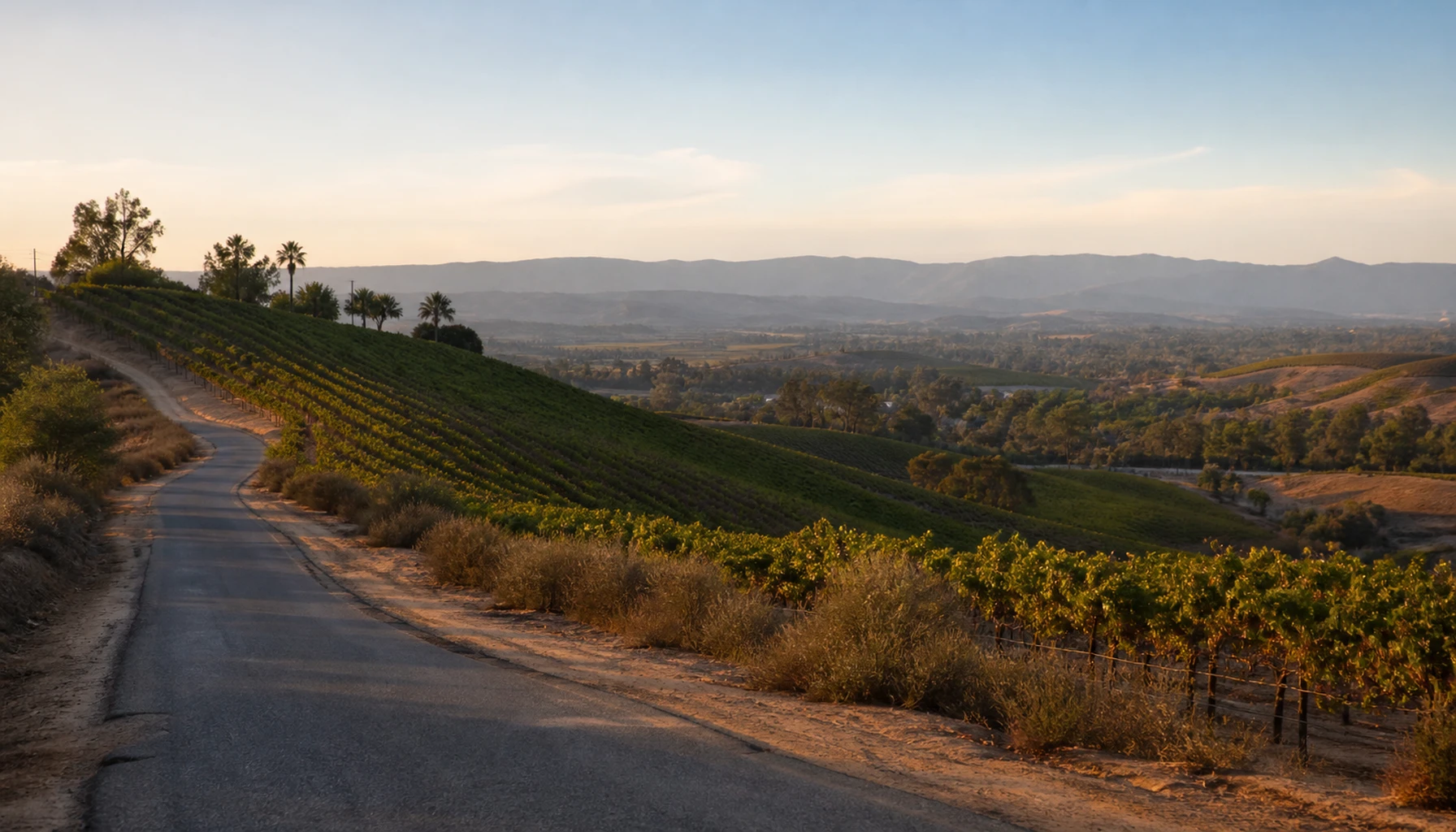
A slower ribbon of road along the valley’s southern edge — family estates, hilltop patios, a winery in a cave, and views back across the whole appellation. Fewer crowds, longer conversations.
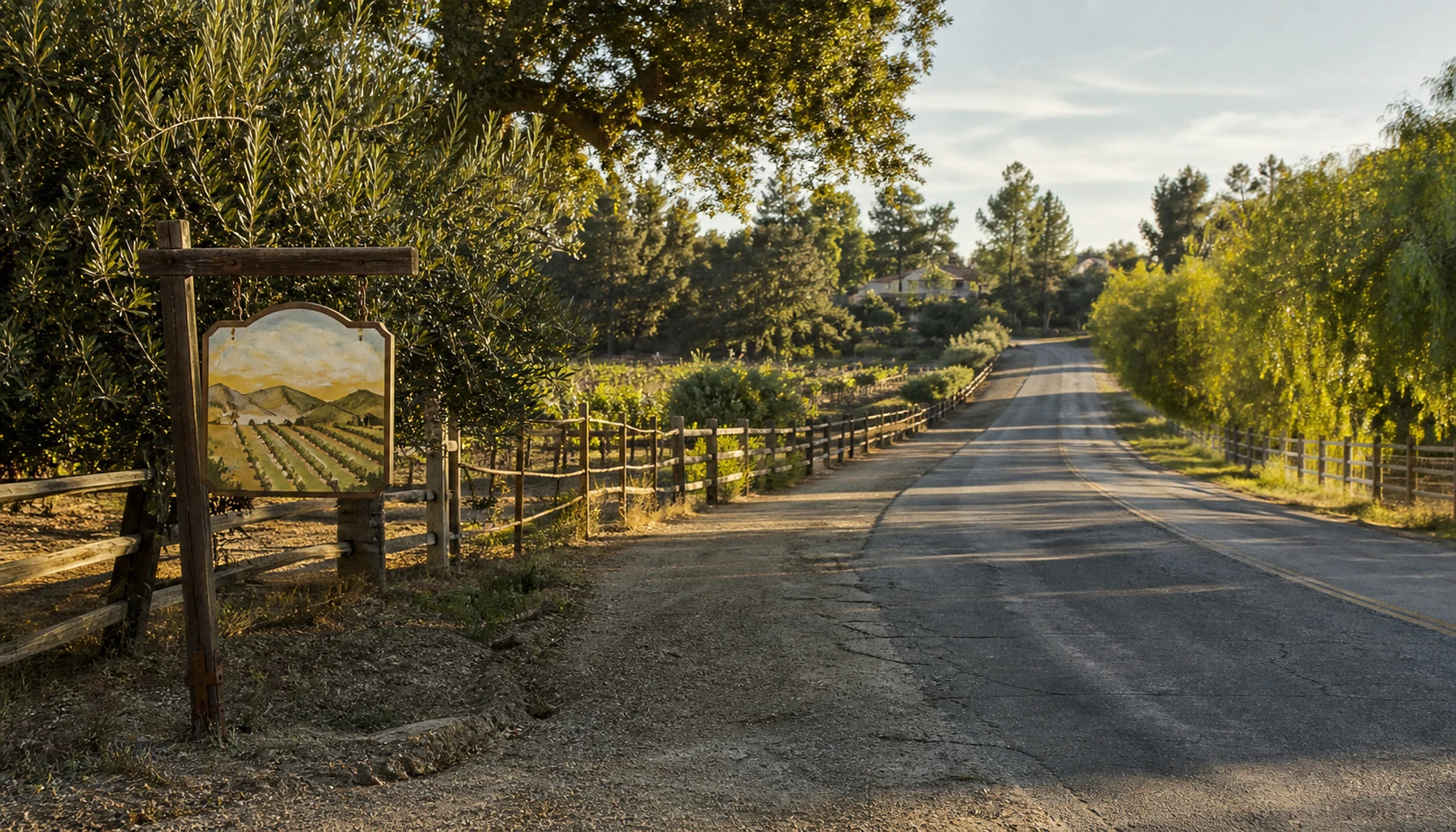
Where the pavement narrows and the lots get small: garage-scale winemakers, single-vineyard obsessives, and tasting bars where the person pouring probably made the wine. Contento means what you think it means.
The valley’s first commercial winery and still a natural first stop — history in the glass and farm-to-table plates at its Meritage restaurant.
Vineyard villas, a working cellar, a stack of state-fair golds, and the Vineyard Rose restaurant — the easiest full wine-country day in one address.
Three hundred acres of vines around a garden tasting room; the Tempranillo and Syrah are among the valley’s best, and lunch under the arbor is a ritual.
Home of the almond sparkling that half of Southern California knows by name. Big lawns, live music weekends, first-timer friendly.
A family garage operation grown just large enough — fierce small-lot reds poured beside the family’s vintage motorcycle collection.
The valley’s other signature happens while the tasting rooms are still dark.
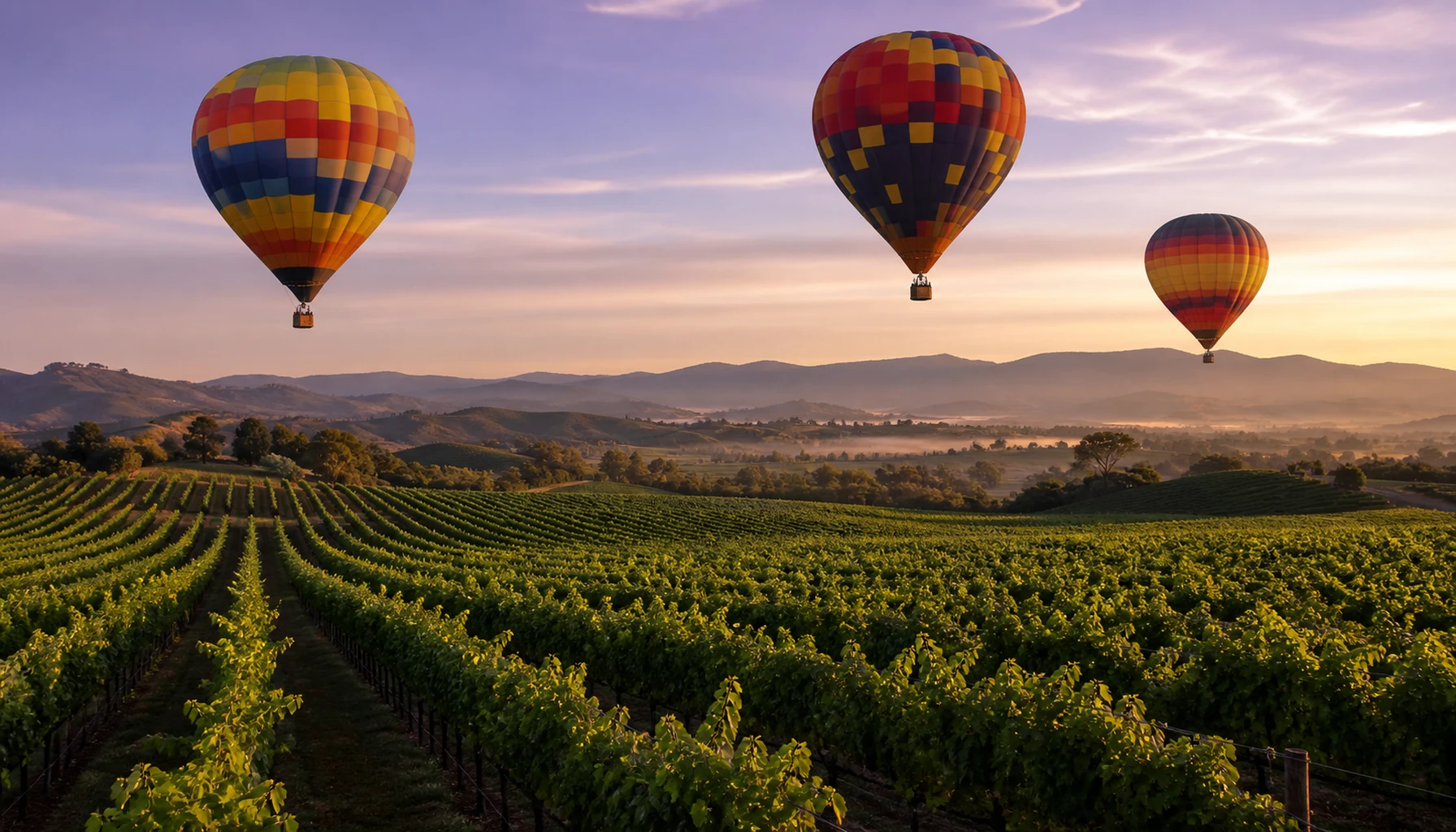
Most mornings of the year, weather willing, hot-air balloons lift off the vineyard flats just after dawn and drift over the vines for about an hour while the valley is still cool and dead calm. Flights land mid-morning — which is exactly when the tasting rooms open. It is the best-sequenced double feature in Southern California, and it books out well ahead on weekends.
Most rooms take (and on weekends, expect) reservations, and groups of six or more usually require them. Book the wineries you care about a week out — two or three for a Saturday.
Flights are generous and the valley’s roads are rural. A designated driver, a shuttle seat, or a hired car is part of the plan, not an afterthought.
Rooms pour from late morning to about five. Two before lunch, one after, is the day that ends well — four is the day that ends early.
Five miles west, the 1880s storefronts of Old Town Temecula take the evening shift: dinner, tasting bars, and somewhere to walk it all off.
Harvest crush in late summer, barrel weekends in spring, quiet green winters — the valley keeps a farmer’s calendar.