The Classic
11:00 — Callaway, where the valley started.
12:45 — lunch at Ponte’s garden restaurant, then the
tasting bar.
3:15 — Wilson Creek for the almond sparkling finale.
6:00 — dinner in Old Town.
A great tasting day is three reservations, one driver, one real lunch, and no ambition to see everything. Here’s how to build it.
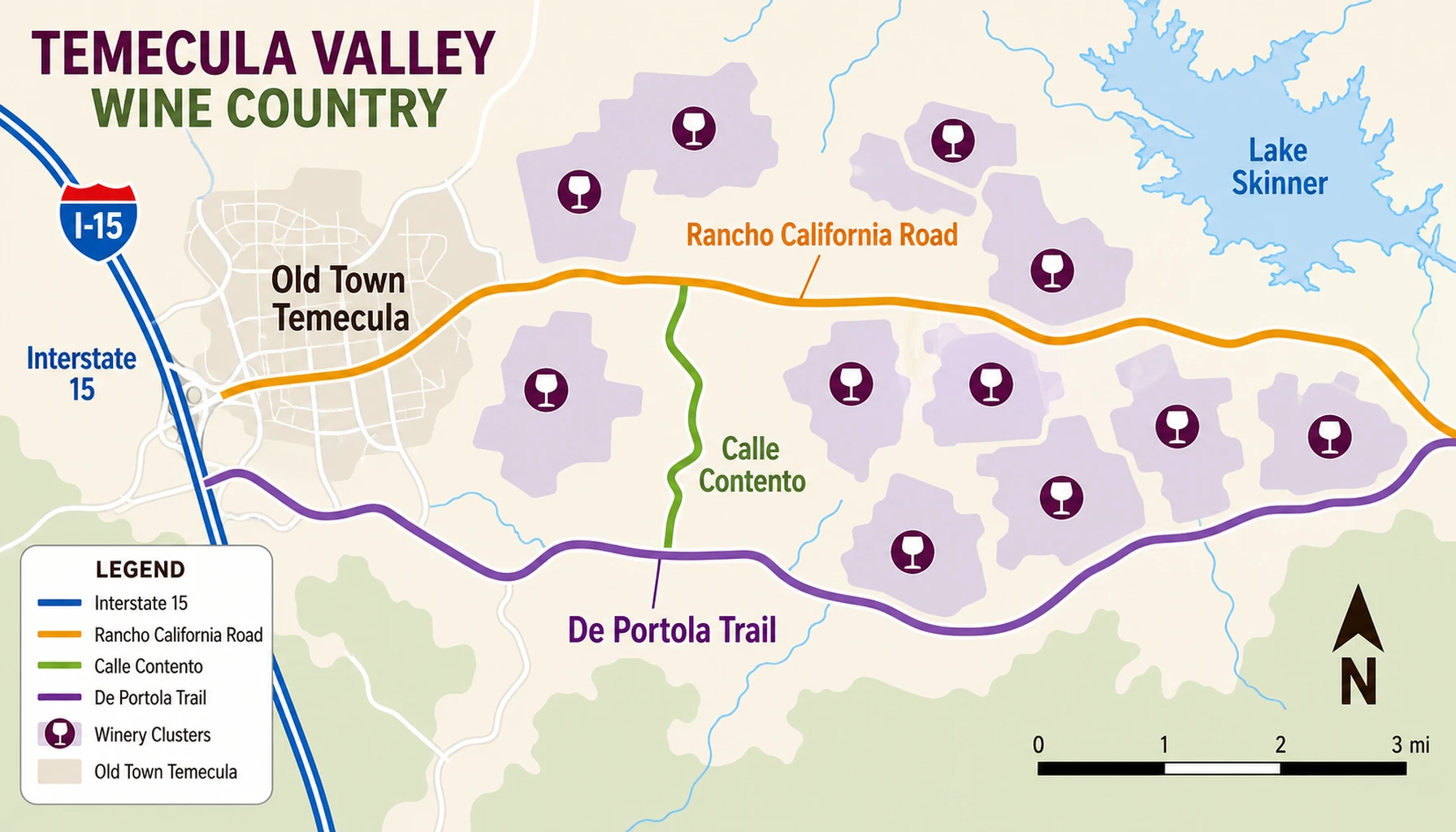
Temecula sits on Interstate 15 in southwest Riverside County. From San Diego it’s about 60 miles straight up the 15 — an hour without traffic. From Orange County, the 91 to the 15 south runs about the same. From Los Angeles, plan on 90-plus miles and honest traffic math. Exit at Rancho California Road and drive east; the last strip mall gives way to vines in about five miles, and the first tasting-room gate arrives before the road stops curving.
Friday and Saturday mornings, the 15 through Corona and Lake Elsinore is the trip’s only real hazard — leave early enough to beat it and you’ll arrive as the rooms open at eleven. Phone coverage is fine throughout the valley, but download an offline map anyway; some winery driveways confuse navigation apps, and the trails are simple enough to drive by signpost.
Each of these is a full, unhurried day with three stops and a real lunch. Swap freely — they’re shapes, not scripts.
11:00 — Callaway, where the valley started.
12:45 — lunch at Ponte’s garden restaurant, then the
tasting bar.
3:15 — Wilson Creek for the almond sparkling finale.
6:00 — dinner in Old Town.
11:00 — Robert Renzoni, Tuscan views first.
1:00 — long lunch & tasting at Fazeli or Europa
Village.
3:30 — Oak Mountain’s cave, cellar-cool.
Evening — sunset from your vineyard casita.
5:45 — dawn balloon flight over the vines.
10:30 — recovery breakfast in Old Town.
12:30 — sparkling flights: Thornton, then South Coast
or Carter Estate.
5:00 — spa hour, then dinner at the resort.
| Spring (Mar–May) | Green hills, bud-break, barrel weekends; the prettiest photographs and mild patio weather |
|---|---|
| Summer (Jun–Aug) | Hot — often mid-90s°F inland afternoons. Taste early, nap at the pool, dine late; balloons still fly the cool dawns |
| Harvest (Aug–Oct) | Crush season: pick parties, stomps, cellar energy everywhere. The valley’s liveliest stretch — book everything early |
| Winter (Nov–Feb) | Quiet, green, occasionally rainy; holiday lights, empty weekday rooms, and the year’s most personal pours |
One constant all year: the marine air through the Rainbow Gap arrives most afternoons around two or three, dropping the temperature and stirring the flags. Locals plan patios around it; now you can too.
Reserve, reserve, reserve. The valley has largely moved to reservations for weekend tastings, all large groups, and every winery restaurant. Book the week before; book crush-season Saturdays two or three weeks out.
Heat is a planning input. From June through September, schedule tastings for the morning and lunch hours, carry water in the car, and treat the 2 p.m. patio as a shaded-seats-only proposition.
Kids, dogs, limos. Every winery sets its own rules and they genuinely differ — family lawns at some, 21-and-over patios at others, pre-approval for buses and stretches at many. One phone call beats one turned-away group.
Wear vineyard shoes. Gravel paths, lawn seating, and cellar floors: the valley dresses “wine-country casual” and nobody has ever regretted flats here.
Cell service is fine; plans are better. Agree on the winery order and the driver before the first pour, not after it.
First-timer guides and weekend itineraries — how other visitors built their day before you build yours.